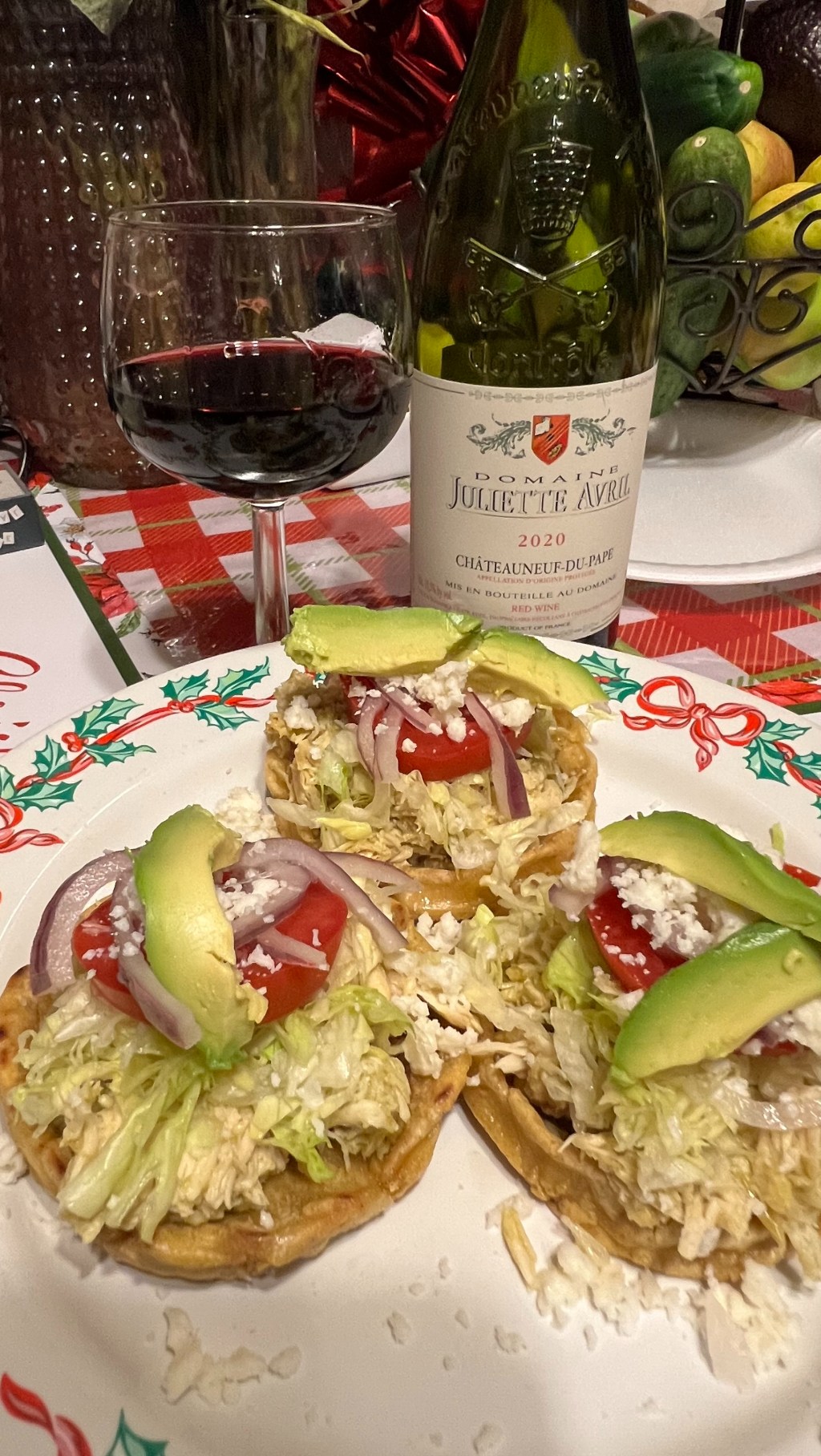
Como se dice (how do you say) Châteauneuf-du-Pape, was something I kept asking myself when I first heard about this wine in my WSET 1 course. Châteauneuf-du-Pape is an appellation in the Rhône region in southeastern France. Este tipo de vino me llamó la atención (this wine stood out to me) because of it’s interesting historical period known as the Avignon Papacy. The name “Chateauneuf-du-Pape” means “new castle of the pope”. This goes back to the fourteenth century when the pope and the center of the Catholic Church were moved from Rome to Avignon. Seven popes later, it was decided to move the Catholic Church back to Rome and for about forty years there were two rival popes who had their own followings. This period is important because wherever the Catholic church goes, so does the viniculture.
Any time you see a French wine bottle have Appellation d’origine contrôlée or AOC, I like to think of it as, este es un vino chingón (this wine has status). This region is one of the most important and famous area in the history of French wine and was the first to receive the AOC status in 1936. French wine laws have geographic boundaries of the named place (wine appellation), a list of approved grape varieties given specific to that named place, and winemaking practices are specified. Wines that do not meet the standard for the desired appellation (named placed) must instead be labeled with another. I bought a bottle and traveled with it from Louisville, Kentucky to my Mexican Christmas household. I shared with my dad how past popes have supported wine practices and explained what an appellation is. He was intrigued by the history but was mostly outraged that I spend $37.99 on a wine bottle. No regrets, you only live once.
I like to compare una appellation como un pastel de tres leches (can be compared to a tres leches cake). Para ser un pastel de tres leches, debería tener todas las leches which are leche entera, leche condensada, y lecha evaporado (In order for the cake to be tres leches there needs to be a mixture of three milks: evaporated milk, sweetened condensed milk, and heavy cream or then it is not really a tres leche cake). Lo mismo se puede aplicar con una (the same goes with an) appellation, son regulations que se tienen que seguir (that need to be followed) para ser considerado un vino de esa appellation. Al fin de la conversación, dije, no hubiera un vino chingón without el Papa Católico, (there would be no Châteauneuf-du-Pape without the papacy).
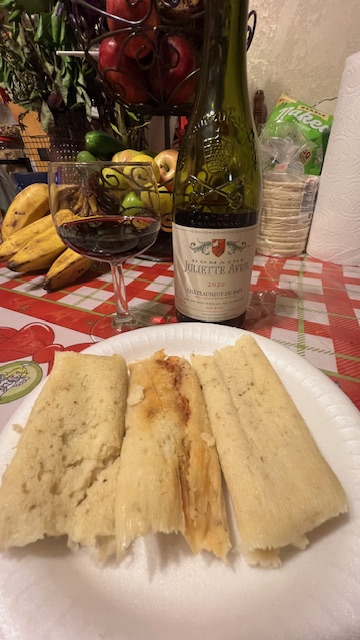
I am a big fan of a full-body red wine but often times my taste in wine is much bigger than my budget will allow me but it does not stop me from splurging during the holidays or celebrate a small personal win from time to time. Splurging on wine for me means spending more than twenty bucks on a bottle. Noche Buena (Christmas Even) fue la ocasión perfecta to open my first Châteauneuf-du-Pape bottle, and have them with tamales de puerco (pork). Pork tamales are made with masa (corn dough) which is then filled with shredded pork bathed in chile guajillo, and then wrapped in a corn husk before being steamed. The pierna de puerco (pork leg) was boiled and then we shredded the meat. My mom boiled the chile guajillo with some garlic, used the blender, added some salt and later poured the sauce over the shredded pork.
When I opened the bottle, my mother said, huele a uvas podridas (smells like rotten grapes) and I started to laugh because my mom did not know this bottle came from one of France’s most prestigious wine appellations. Châteauneuf-du-Pape is known as a GSM blend, a red wine blended from Grenache, Syrah, and Mourvedre. Often times, this type of wine is very aromatic with cherries and other red fruit flavors.
I did not finish the wine bottle during noche buena porque no quería entrar borracha a la misa (because I did not want to go drunk to the midnight Catholic mass) so I stored the rest of the wine for the following day. The following day, I made sopes de pollo with my mom and I felt the wine tasted more amazing. Sometimes the wine can taste better the next day because you are allowing time for it to breathe. The sopes were fried and filled with shredded chicken en salsa verde topped with lettuce, cheese, tomato and avocado. I already had appreciated the perfume from the wine and the berry notes on the first night, but on the second night it seemed that the wine expressed itself a little more and connected with the fried sopes. The crunch from the fried corn sope and the creamy texture from the avocado really complemented the wine. As I am learning about wine, there are so many answers to a wine tasting experience but at the end of the day you have your own palate with your own preference, you just have to be willing to taste and get outside of your comfort zone.
So what does Châteauneuf-du-Pape taste like?
Domaine Juliette Avril Chateauneuf du Pape is a blend of 75% Grenache, 15% Syrah and 10% Mourvedre. The aromas are pretty powerful and smelled like dark berries and plums. Technically, my mother was not wrong to state that the wine smelled like rotten grapes since the region is abundant with sunshine. Remember climate impacts the characteristics of the grape, more sunshine promotes optimal ripening of the grapes and contributes to the concentration of aromas and flavors in the wines.
- Grape: Grenache, Syrah, Mourvedre
- Region: France/ Châteauneuf–du-Pape
- Wine Style: Red Wine Blend or GSM Blend
- Alcohol Content: 14%
- Medium Bodied
- Dry
- Medium Acidity
- Flavors: Plum, Raspberries and Dark cherries
 WineMadrina