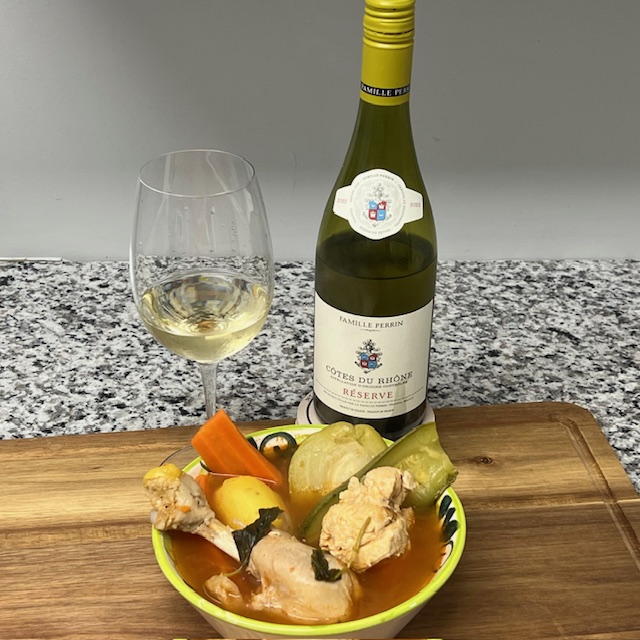
Caldo means soup and in Louisville it was the perfect occasion to have this comforting bowl of love. When it is actually freezing in Kentucky, Caldo de Pollo hits differently since I am use to eating caldo on a non-freezing day. Caldo de Pollo is a Mexican traditional chicken soup that is made with veggies, a tomato base, and with one of my favorite subtle ingredients called hierba buena. Hierba buena has a strong and very aromatic menthol smell y quería aprender más sobre los vinos aromáticos (and I wanted to learn more if this caldo needed to be paired with an equally aromatic wine).
I added Mexican chayote which is a type of squash and poured “El Pato Sauce” to my caldo which is commonly used in a Mexican household and it’s a huge timesaver for a young professional & amateur cook like myself.
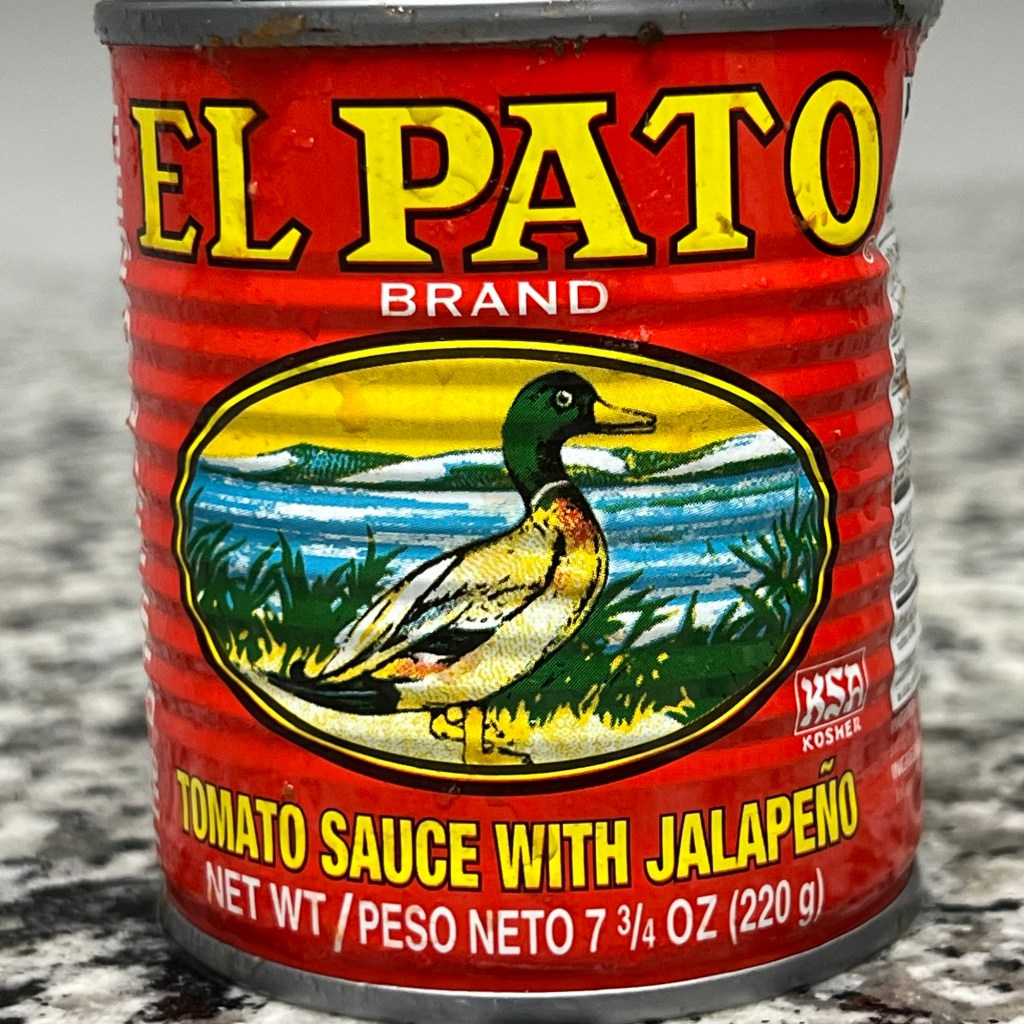
Upon the eyes of a traditional Mexican cook, I was lazy to make the sauce and opted out to pour canned Pato sauce, ósea me gusta mi trabajo y la cocina pero tampoco tengo mucho tiempo para andar being traditional in the kitchen!
Wine flavors can be organized as fruit, floral, herbal, spice and earthy. Aromatic wines can often complement herbaceous aromatic dishes like Caldo de Pollo due to the shared flavors and aromas.
Before learning about aromas, it’s helpful to know the steps on how white wine is made. There are five steps to make white wine:
- Crush the grapes
- Press the grapes
- Fermentation
- Maturation
- Bottling.
Grapes are harvested and crushed releasing the juice from the grape. When the juice is released, yeast has access to the juice. The grapes are then pressed, the skins are removed from the juice and once the skins are removed, then you have fermentation. Fermentation can happen in oak or in other vessels such as stainless steel. After fermentation is complete then the wine can go to maturation and sometimes it will be matured in oak. Finally, you bottle the wine.
Wines acquire their flavors from a combination of factors, including the grape variety, the winemaking process, and the aging process. The primary aromas come from the specific grape variety used, while secondary aromas originate from fermentation-related microbial reactions. Tertiary aromas develop from oxidation and aging. Additionally, the environment in which the grapes are grown, the soil, climate, and winemaking techniques all contribute to the final flavor profile of the wine.
The next time you have a glass a wine, smell it and ask yourself these questions?
- What fruit comes to mind?
- Does it smell like flowers? Does it remind me of the flowers from a funeral?
- What herbs do I smell?
- Is there some type of kick to this wine (spice)? Black pepper?
- Is it earthy? Does it taste like the soil I once tried to eat when I was a kid? Does it remind me of fresh grass?
The aromatic and herbaceous qualities of Caldo de Pollo make it an interesting pairing with a white wine, such as Famille Perrin Réserve Côtes du Rhône Blanc – 2023. The wine’s tangy notes and fresh-cut herb hints complement the flavors of the soup. The medium-bodied, dry white blend with flavors of very ripe pears, along with its acidity, makes it a balanced and flavorful caldo experience. This white blend consists of four different grapes Marsanne, Roussanne, Grenache Blanc, and Viognier grown under the Côtes du Rhône appellation.
Something to note about the grape name Marsanne is that it is well-known in the Rhône Valley. Often times it is a grape used to provide further depth and complexity to Viognier and Grenache Blanc in the blends of white Côtes du Rhône. Marsanne generally boasts notes of stone fruit and beeswax. Roussanne is used to produce powerful, elegant wines with aromatic complexity and good acid structure. Grenache Blanc is related to the red grape Grenache and is characterized by its intense flavors of green fruit, high alcohol and low acidity. Viognier does well with richer sauces and works with aromatically complex ingredients like ginger and lemongrass.
Wine Bottle Name: Famille Perrin Réserve Côtes du Rhône Blanc – 2023
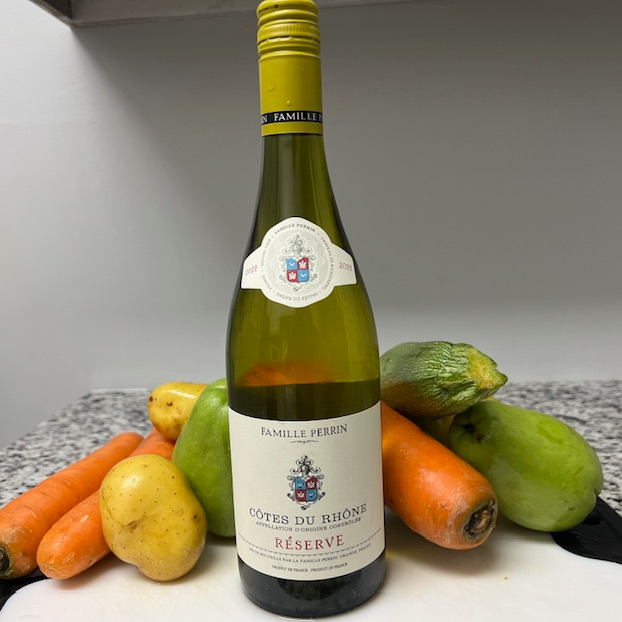
- Grape: Grenache blanc, Marsanne, Roussanne, Viognier
- Region: Rhône Valley, Côtes du Rhône
- Wine Style: White Blend
- Alcohol Content: 13%
- Medium Bodied
- Dry
- Medium Acidity
- Flavors: Seductive pale-yellow colour with shiny reflections. This wine reveals a nose full of freshness and deliciousness with aromas of very ripe pears and candied quince, with a hint of anise. Round and well balanced, the palate offers tangy notes before evolving towards pastry and juicy fruit aromas. The long finish is lively with a nice texture.
 WineMadrina