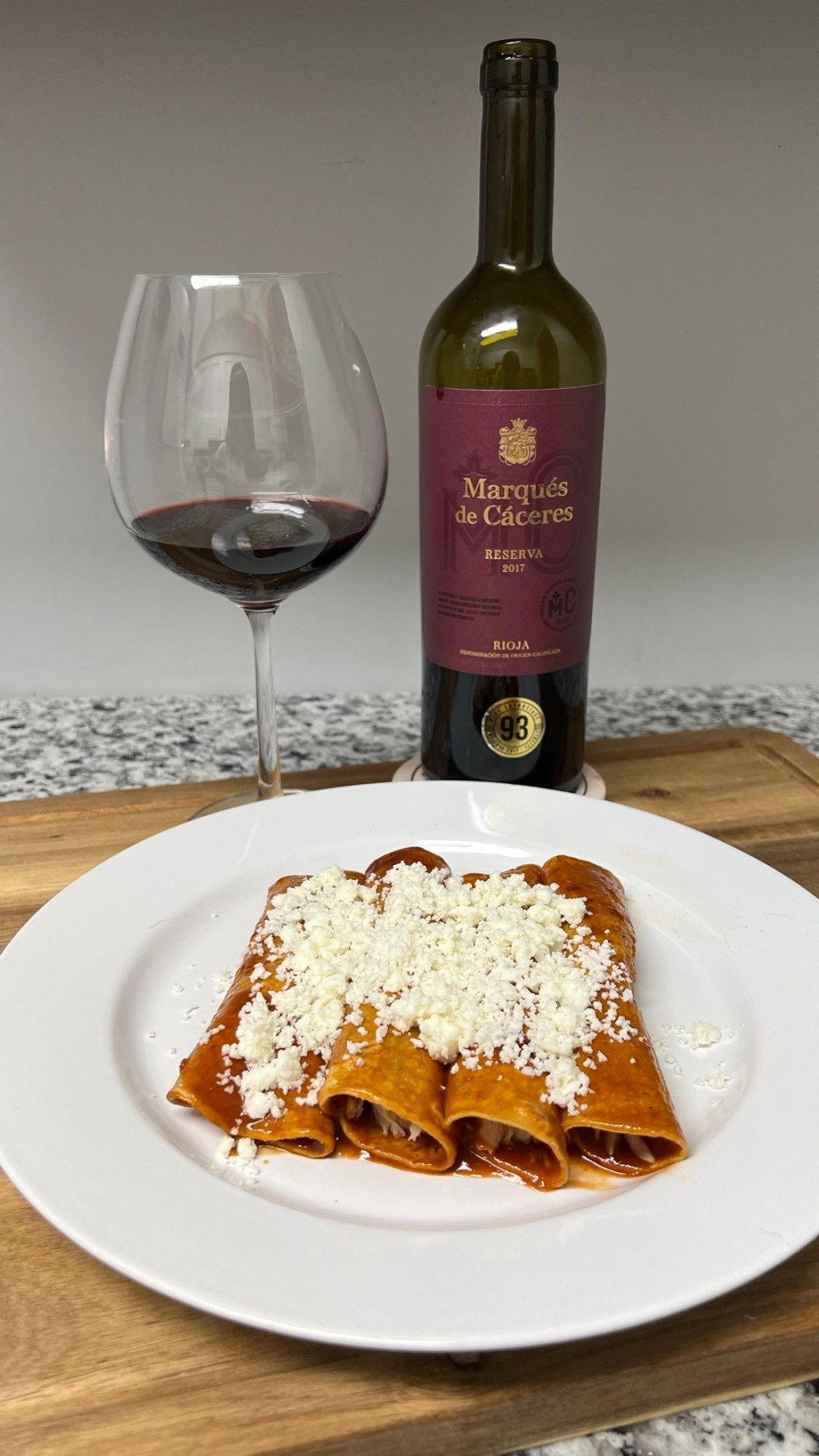
Rioja is a famous region from Spain where wines are classified based on how long they age in oak. The region lies in north central Spain near the border with France along the Rio Oja River. Enchiladas rojas, on the other hand, are a traditional Mexican dish made of tortillas wrapped around a type of meat or cheese, and then smothered in a chili sauce. This pairing reminded me of the beloved Spanish singer, Rocío Dúrcal, because of her boldness, warmth and the respect she embodied for both Spanish and Mexican traditions. Era española pero su interpretación de canciones rancheras mexicanas como Amor Eterno siempre será recordada en el corazón de la gente y estará presente en cada funeral mexicano. (She was a Spaniard but her interpretation of Mexican ranchera songs like Amor Eterno will forever be remembered in people’s heart and be present in every Mexican funeral)
If there is one song that can describe a Rioja, it would the beautiful song named “Como Han Pasado Los Años” where the lyrics express sentiments of love, longing, and reminiscence, as the singer reflects on the years gone by. Just as a Rioja wine matures and improves with age, the song “Como Han Pasado los Años” reflects on the passage of time and the enduring emotions that accompany it. Both the wine and the song have a timeless quality that resonates with people across generations. Most importantly Dúrcal’s sense of emotional depth that she conveyed in her performances was the same level of depth I embodied as I ate the red enchiladas on my kitchen table (haha). Despite their differences in origin, ambos tienen un significado cultural asociado con reuniones and a strong emphasis on family value.
I grew up eating enchiladas rojas pero yo no discrimino porque tambien me fascinan las enchiladas verdes (but I do not discrimate as I love green enchiladas as well). My mom would make them out of ground beef with thinly sliced carrots and onion and then my siblings and I would fight over the leftovers the next day. The #1 rule to remember about making enchiladas is that the sauce must rely on chiles, and the tortillas should be passed through the salsa either before or after getting a light fry to soften them. I decided to make the enchiladas out of leftover rotisserie chicken and smothered them in a combination of pato sauce and enchilada sauce. Finally, I added queso fresco and sipped on my rioja wine!
Why I decided to pair enchiladas rojas con un vino Rioja?
For this pairing, I connected the long history of enchiladas with the aging process of a Rioja wine. Both show the importance of tradition and patience, and highlight the significance of time, and skill in creating a dish and wine that will last for many generations.
Enchiladas have been a traditional dish for a long time, evolving and adding new ingredients and techniques while keeping their essence. The word “enchilada” comes from the Spanish word “enchilar,” which means “to season with chili.”
In the Rioja region, winemaking has been refined over centuries. They make wine of exceptional quality and character, and have been doing so for over 2,500 years. The primary grape used in the region is Tempranillo, which can age for over twenty years, but is more expensive. Tempranillo wines pair well with a variety of foods, including Spanish cuisine such as tapas, paella, and roasted meats (like lamb and pork). They also complement dishes like grilled steak, pasta with tomato-based sauces, and aged cheeses.
What does it mean when a wine is aged?
The saying, “The more you age, the finer you get,” most likely refers to Rioja wine because it is a classic example of this saying. Rioja wines are often aged for extended periods in oak barrels and/or bottles before release. When you hear the phrase “aged in oak barrels,” it means that the wine is stored and allowed to mature in oak barrels for a certain period of time, during which it absorbs flavors, aromas, and characteristics from the oak wood, which can significantly influence its taste and complexity. Oak barrels can impart various flavors such as vanilla, caramel, spice, and sometimes even subtle notes of wood itself.
The length of oak aging varies depending on the wine’s classification, ranging from a few months for young wines to several years for Gran Reserva wines. Spain’s Aging Classification is based on the 3 categories listed below:
- Crianza – A Crianza wine must be aged for a minimum of two years, with at least one year spent in oak barrels and the remainder in the bottle. For white and rosé Crianza wines, the minimum oak aging requirement is six months.
- Reserva – A Reserva wine must be aged for a minimum of three years, with at least one year spent in oak barrels and the remainder in the bottle. For white and rosé Reserva wines, the minimum oak aging requirement is also one year.
- Gran Reserva – Gran Reserva wines, which are the highest classification in Rioja, have even longer aging requirements, with a minimum of five years of aging, including at least two years in oak barrels.
Overall, aging in oak barrels is considered a crucial step in the production of many high-quality wines. This patient process helps the wine mature nicely, so it becomes rich, complex, and shows the unique characteristics of the place where the grapes were grown.
Las enchiladas de pollo con un vino de la región de Rioja fueron una excelente combinación, ya que ambos son complejos y tienen especias. El maridaje del vino de Rioja con las enchiladas aportó sabores audaces que complementaron los elementos picantes y sabrosos del plato. Los tonos afrutados y terrosos de los vinos de Rioja equilibraron el picante de la salsa de chile, realzando los sabores del relleno. Es una fusión de las cocinas española y mexicana que realza lo mejor de ambos mundos en el paladar. (
The chicken enchiladas paired with a wine from the Rioja region were an excellent combination, as both are complex and have spices. The pairing of Rioja wine with the enchiladas brought bold flavors that complemented the spicy and flavorful elements of the dish. The fruity and earthy tones of Rioja wines balanced the spiciness of the chili sauce, enhancing the flavors of the filling. It’s a fusion of Spanish and Mexican cuisines that enhances the best of both worlds on the palate)
Wine Bottle Name: Marqués de Cáceres
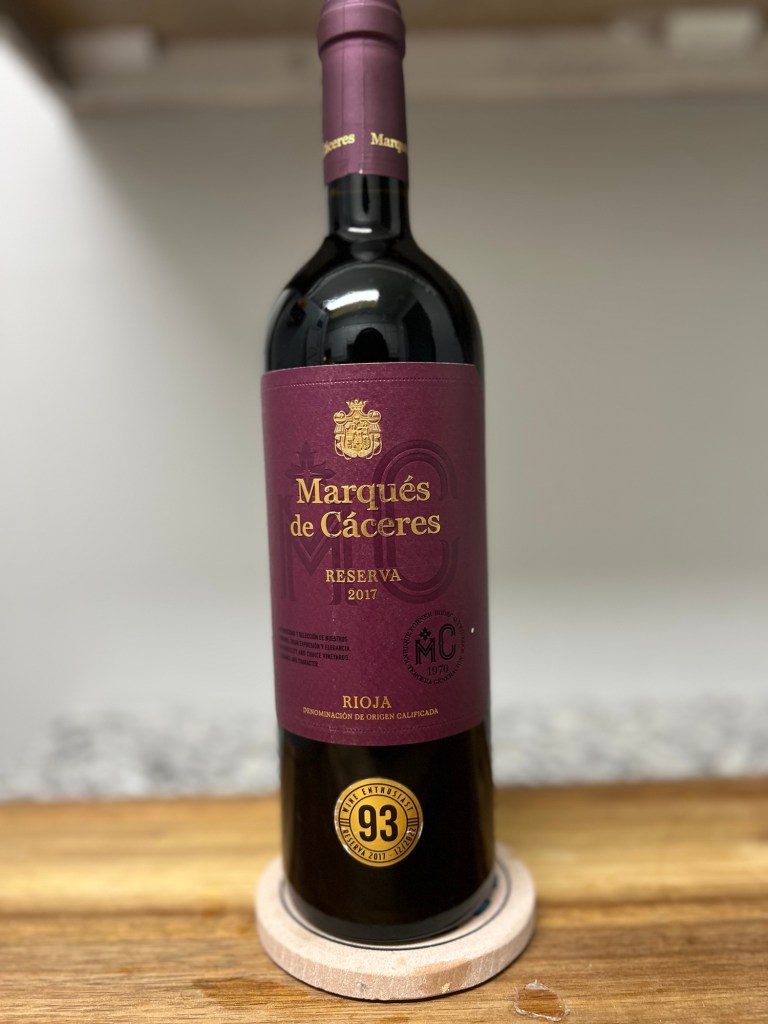
- Grape: 90% Tempranillo, 10% Others varieties
- Region: Spain / La Rioja
- Wine Style: Red Blend
- Alcohol Content: 14%
- Medium Bodied
- Dry
- Medium Acidity
- Winemaker Notes: Dark and dense ruby color. Refined and complex aroma with a touch of cherry, vanilla and soft toasted notes. Balanced in the mouth, where the silky and well-defined tannins are combined with exquisite flavors to reveal a pleasant fullness. A well-knit, medium-bodied red, with light, taut tannins trimming notes of crushed black cherry, baked fig and hints of dark chocolate, tobacco, and minerals. Not a powerhouse, but rather fresh and elegant throughout, suggesting this is perfect for sipping or pairing with food.
 WineMadrina