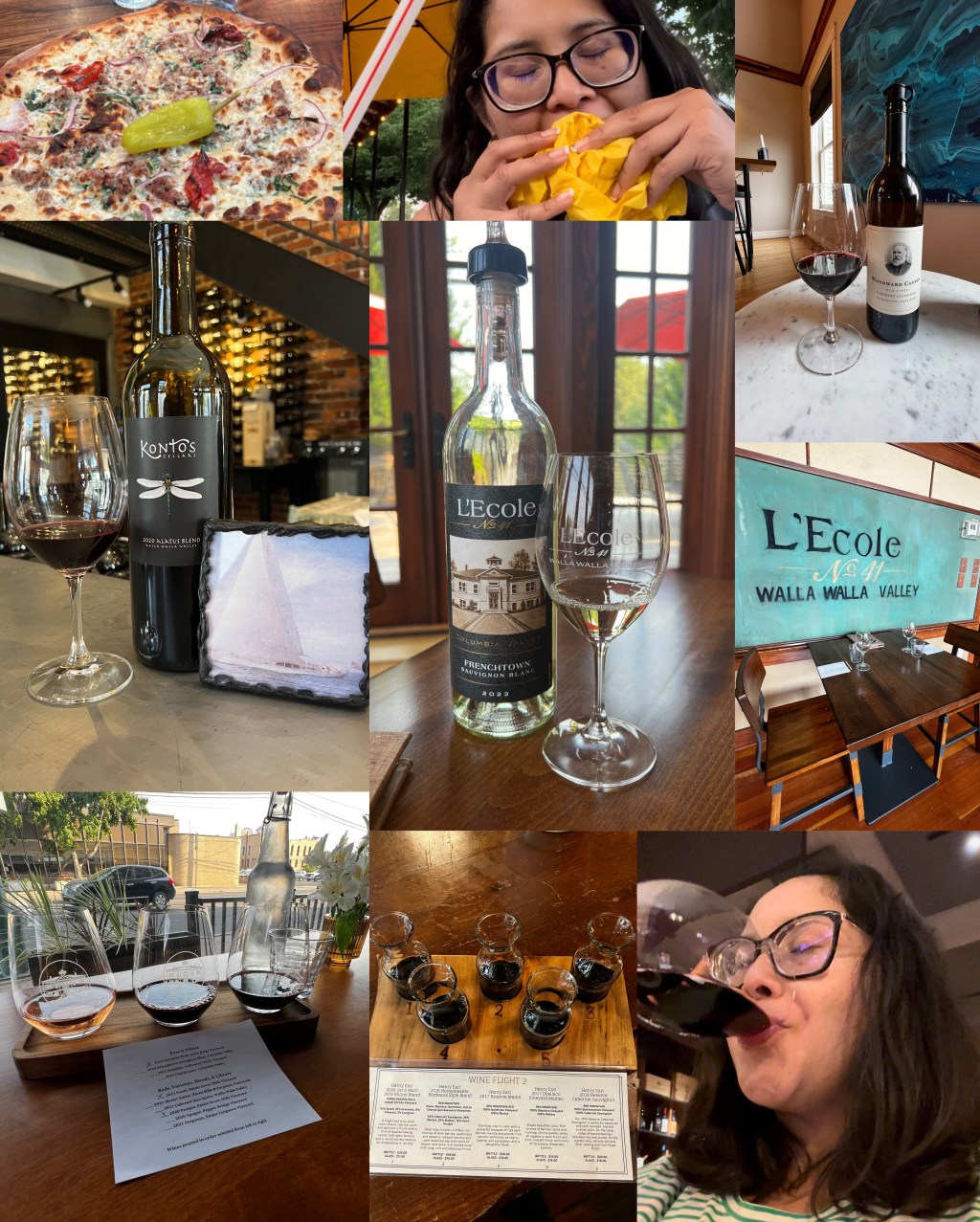
On my work trip, my two worlds collided – the serious business of dam structures in the Pacific Northwest and my love for wine. It was like the Universe saying, “I got you!” Navigating life as a young structural engineer and a wine novice definitely made it a unique experience to find out what makes the wines from this region so unique and broaden my palate.
When I tasted the wines, I was like, “Whoa, ahi güey, ¿qué está pasando aquí (what’s happening in this glass)? Mucho sabor, mucha emoción (so many flavors)!” After sipping and decoding the descriptions, I realized that the wines from Walla Walla Valley are not simple to understand, all I knew was that these red wines gave my soul some boldness, smoke, and mystique. In the world of wine, these wines can be summed up as complejas, balanceadas, y elegantes (complex, balanced, and elegant).
It was such a gorgeous, hot day, and I found myself admirando (marveling) at how close the vineyards were to the project site I was visiting. I couldn’t believe how my two interests came together so perfectly in a single day. I was absolutely fascinated to see a vineyard casually growing next to a Lock & Dam, right alongside the river. As a structural engineer who evaluates risk, an active imagination and the tendency to overanalyze is part of the job. The main question I kept asking myself is, what are some potential impacts the river has on the surrounding area? Picturing the fate of the wine and vineyards during high water, I pondered the recovery time for the beautiful vines. As I admired the scenery and reflected on the moment, my mind drifted to the vineyard nestled on the hill… The rest I left to my imagination.
When I think of the Pacific Northwest, I think of a lot of rain, snow, and cold weather, but Walla Walla was different. It reminded me of some areas of Sacramento with the golden grass, but here it was more like golden hills. The climate in Walla Walla consists of a long summer, which is important to understand as it gives enough time for the grapes to ripen and mature, and that is when we get those bold tannic red wine flavors. This extended period of warmth allows the grapes to develop complex flavors, creating a diverse range of wine styles. The notable diurnal temperature variation in Walla Walla also plays a crucial role, preserving the grape’s natural acidity and enhancing the depth of flavor. Furthermore, the unique terroir of Walla Walla, characterized by well-drained soils and ample sunshine, contributes to the distinctive characteristics of the wines produced in the region.
The key thing I learned about the Walla Walla region is the types of grapes grown here. The grapes grown in this region are Cabernet Sauvignon, Syrah, Merlot, Cabernet Franc, and Malbec. All of these are red wine grape varieties. They produce red wines that can range from medium to full-bodied, with varying levels of tannins, acidity, and alcohol content. Many of these varietals age well, developing more nuanced flavors and aromas over time. A wine with nuanced flavors might have hints of fruit, spice, and earthy tones that become more apparent as it ages. Each of these varietals is grown in various wine regions around the world, reflecting their adaptability to different climates and soils. These commonalities make them popular choices among winemakers and wine enthusiasts for both single varietal wines and blends.
After spending four days overthinking potential failures, it was time to enjoy some wine at one of the oldest wineries in the Walla Walla Valley. Here’s my experience of the Walla Walla Wine Wobble as I visited various tasting rooms in downtown Walla Walla and the vineyards.
L’Ecole No. 41: One of the oldest wineries in the Walla Walla Valley, housed in a historic schoolhouse, L’Ecole No. 41 is famous for its diverse portfolio, including robust reds and crisp whites.
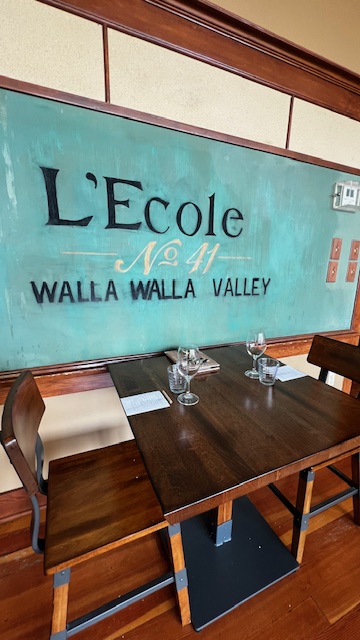
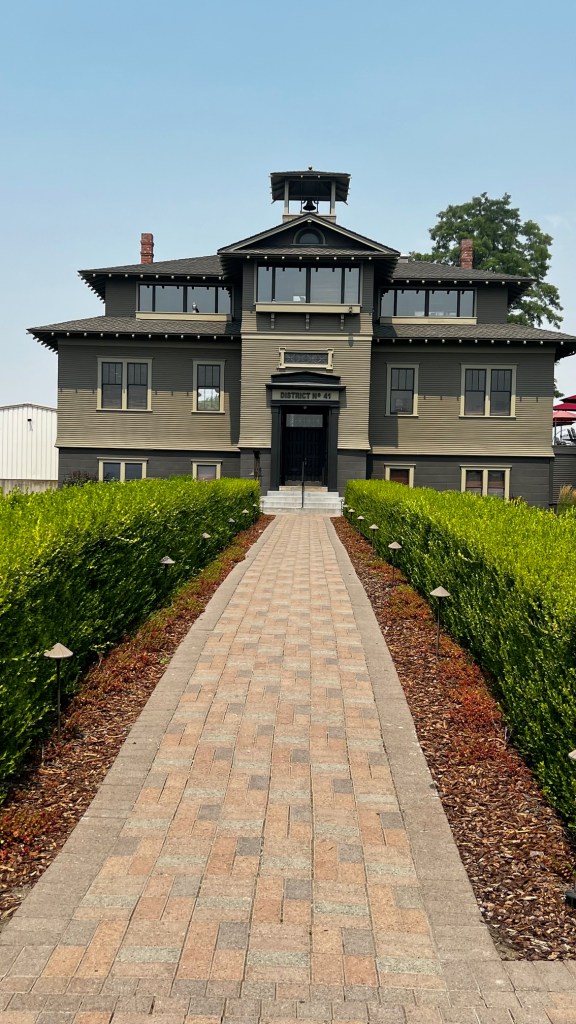
The rosé was refreshing and had body to it. Very aromatic. The Syrah was smoky, mysterious with a touch of boldness but medium-bodied. I tasted Perigee for the first time. Perigee is not a grape variety but rather a specific wine produced by L’Ecole No 41. Perigee is one of their flagship wines, typically a Bordeaux-style red blend made from grapes grown in their Estate Seven Hills Vineyard. The blend typically consists of grape varieties like Cabernet Sauvignon, Merlot, Cabernet Franc, Malbec, and Petit Verdot. This wine is prized for its rich and complex flavor, featuring hints of dark fruits, spice, and a touch of earthy minerality that reflects the distinctive terroir of the Seven Hills Vineyard.
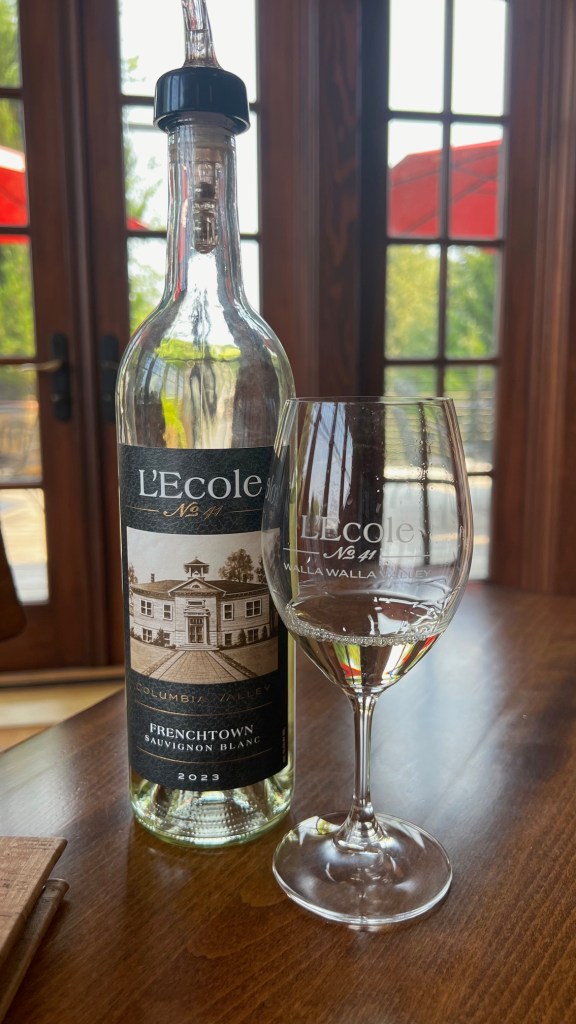
Their Sauvignon Blanc was released two weeks ago and it was their first time bottling it as 100% SB. While I enjoyed the experience, I couldn’t help but compare it to the vibrant, fruity Sauvignon Blanc I’ve had from New Zealand. The wine had a crisp, refreshing taste with a hint of citrus, but I found myself longing for the intense tropical fruit flavors and zesty acidity characteristic of New Zealand Sauvignon Blanc. Nonetheless, it was an interesting departure from their usual offerings, and I appreciated the opportunity to taste their inaugural 100% Sauvignon Blanc bottling.
Woodward Canyon
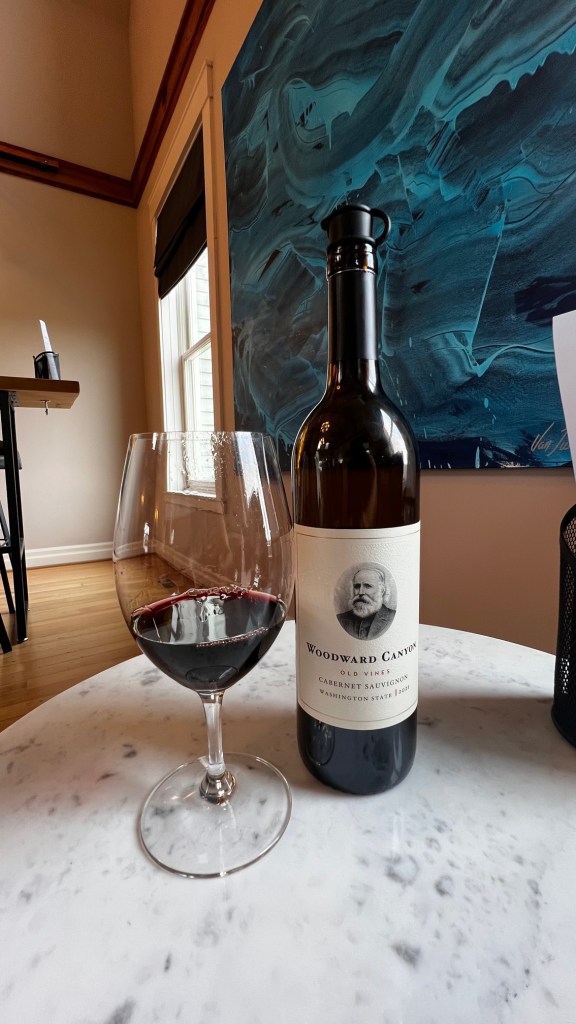
I loved each wine I had! No complaints here! It was a cute little tasting room, and it felt a little odd because outside it was like 104 degrees, but I was freezing inside with the AC. With some red wine, it felt like winter in the midst of a hot heatwave. The cozy atmosphere of the tasting room, combined with the delightful selection of wines, made the experience truly memorable.
Henry Earl Estate Wines
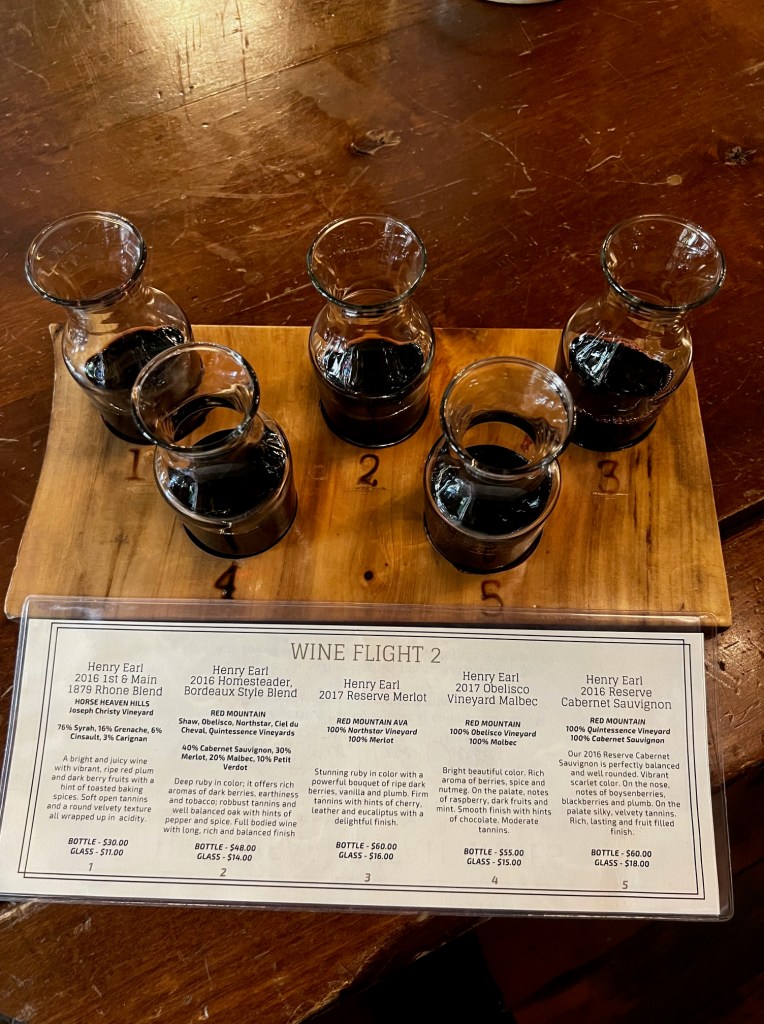
I wobbled my way into this tasting room since it was one of the few that were open late, staying open until 8 pm. I visited the downtown tasting room, and it felt like I was in another era; the chairs and the paintings on the walls gave off “You are in an important social elite club” vibes from another timeline.
Other Wineries I visited in Downtown Walla Walla
- Kontos Cellar
- Mercer Wine Estates
- Gard Vintners

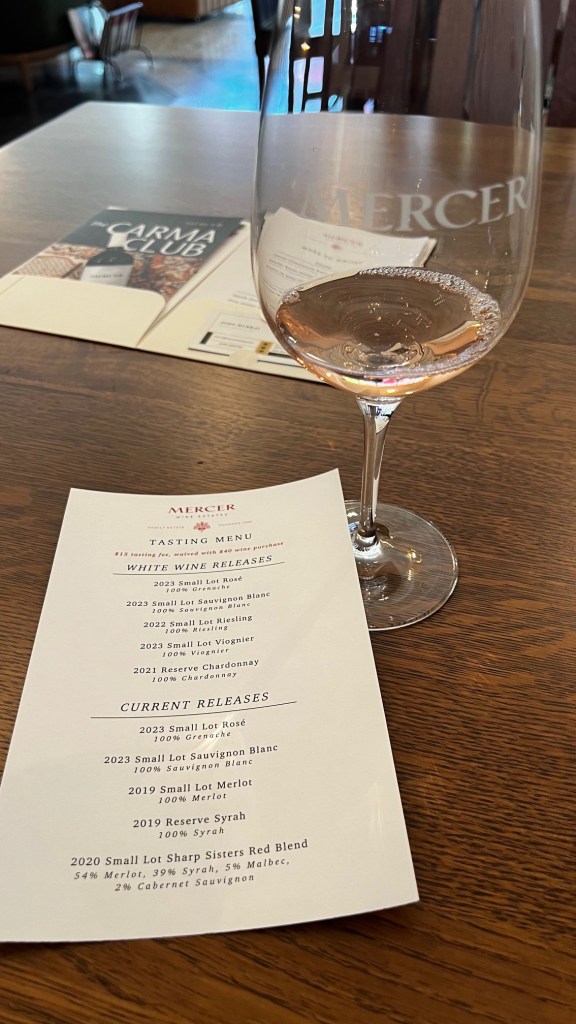
Overall, this trip has inspired me to continue being a structural engineer who wobbles their way into the wine world. What truly astonishes me is that, despite having the same wines, it is the environment that consistently shapes the distinct and unique qualities of each grape. Just as the finest vines thrive in the right soil and climate, so too do we flourish when nurtured by the right environment.
 WineMadrina