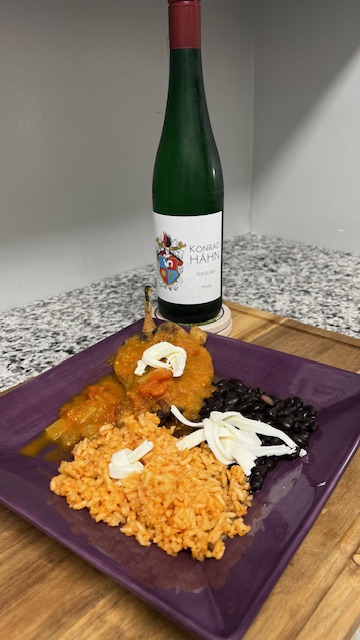
When you make chile rellenos, you are really making a commitment to create something beautiful for the people you care about. Chile Rellenos originated in Puebla and is a beloved Mexican cuisine steeped in history and tradition. This traditional recipe features roasted poblano peppers stuffed with cheese or meat, enveloped in a delicate egg batter, and fried to golden perfection. For years, I found chile rellenos to be an intimidating dish—one of those recipes you admire from a distance but don’t dare attempt. But my curiosity about Riesling (and its magic with spicy food) finally pushed me to face my fear and tackle my chile relleno craving. Let me tell you, making chile rellenos is a journey. It’s all about the steps, the prep, the patience, and the technique—and committing to it like your life (or at least your dinner) depends on it.
To be real, I’ve never tried making them myself until I moved to Kentucky. Chile rellenos are one of my all-time favorite Mexican dishes, but let’s be honest, they’re pretty labor-intensive, and I’m often too “floja” lazy to make them. My favorite part was always cutting the chile open, adding crema in the center, and spreading that creamy goodness all over the poblano. Then you grab a warm, toasty tortilla and ay, se me hace agua la boca! They take time and prep, and for years, I just relied on my mom to whip them up. I have so much respect for her, though— she’d made these for the family while working night shifts, siempre para complacer a su familia.
Why intimidating? Porque, girl, necesitas tiempo para hacerlos, and honestly, I hardly even fry any of my food, but the chiles were the exception. I grew up eating chile rellenos stuffed with carne molida (ground beef), and these days, I don’t even bother ordering them at restaurants; it’s always seems to always be cheese, which—don’t get me wrong, I love cheese—but I’d much rather have that classic picadillo (ground beef). To make your own delicious chile rellenos, here’s a list of ingredients you’ll need:
How I Made Chile Rellenos
Ingredients Needed
- Chile Poblanos
- Banana Peppers
- Tomatoes
- Jalapenos
- Onions
- Garlic
- Cumin
- Eggs
- Flour
- Knorr Consomé
- Queso – Oaxaca Cheese & Monterrey Jack
- Ground Beef
- Black Beans
- Rice
- Regular Corn Oil
- Toothpicks
Step 1: Selecting the Peppers
- Choose flatter poblano peppers with fewer crevices, as they are easier to handle when stuffing.
Step 2: Roasting the Peppers
- Preheat your oven to 425°F (220°C) or roast directly over an open flame.
- Place the poblano peppers on a baking sheet or directly on the flame.
- Roast until the skin is blistered and charred; this usually takes about 10-15 minutes.
- Once blistered, place the roasted chiles in a plastic bag to steam for about 10 minutes. This will help loosen the skin.
Step 3: Peeling the Chiles
- After steaming, carefully peel off the charred skin of the chiles under running water. Set aside.
Step 4: Preparing the Filling
- Sauté chopped onions and garlic in a skillet over medium heat until fragrant.
- Add finely shredded carrots (optional) and ground beef to the skillet.
- Season with salt, black pepper, and a touch of cumin.
- Cook until the beef is browned and fully cooked. Set aside to cool slightly.
Step 5: Stuffing the Chiles
- Carefully open each roasted poblano and remove the seeds.
- Stuff each chile generously with the prepared ground beef mixture and cheese (Oaxaca and Monterrey Jack).
- Use toothpicks to secure the opening of the chiles or seal them with the egg batter later.
Step 6: Making the Egg Batter
- In a mixing bowl, beat eggs (usually 2-3 depending on how many chiles you’re making) until frothy.
- Gradually add flour while mixing until you achieve a smooth and thick consistency.
- Making the egg batter was the trickiest part for me—it didn’t turn out like the tutorials, and I started panicking. Luckily, a friend with a bit more experience stopped by just in time to help and offer guidance, which made all the difference.
Step 7: Coating and Frying the Chiles
- Heat corn oil in a deep frying pan over medium-high heat.
- Dip each stuffed chile into the egg batter, ensuring it’s fully coated.
- Carefully place the battered chiles into the hot oil. Fry until golden brown, about 2-3 minutes on each side.
- Remove the chiles and place them on a plate lined with paper towels to soak up excess oil.
Step 8: Serving
En mi casa, casi siempre los chile rellenos los comíamos secos, pero sé que hay familias que prefieren bañarlos en una salsita. Yo hice una receta hybrid. I made a salsa with boiled tomatoes and jalapeños, sautéed onions, garlic, banana peppers, salt, y un poquito de Knorr consomé. No puse los chile rellenos directamente en la salsa porque no soy muy fan de que el egg batter se ponga “soggy” aguado. En vez de eso, opté por servir el chile en el plato y luego I poured the salsa on top. ¡Así queda perfecto, con todo el sabor pero sin perder la textura!
- If desired, you can serve the chile rellenos with a salsa made from boiled tomatoes and jalapeños, sautéed onions, garlic, and banana peppers.
- Alternatively, rather than soaking the chiles in the salsa, pour the salsa over the plated chiles to maintain the crispiness of the batter.
- Side 1: Boil black beans in a pot with hot water. Add salt and two bay leaves and then you have a side dish for the chile rellenos.
- Side 2: Fry white rice with oil until golden brown. Add a canned of tomato sauce and 1-2 tablespoons of Knorr consomé and then you have a side for this dish.
Step 9: Pairing with Wine
- Serve your chile rellenos with a chilled Riesling, which complements the dish beautifully, balancing the flavors without overpowering the meal.
What is important to learn about a Riesling?
There are four main styles of Riesling: dry, off-dry, semi-sweet, and sweet. Climate and terroir greatly influence Riesling, with cooler climates producing wines that are higher in acidity and lower in sugar. So, where can Riesling thrive? Dry Rieslings often comes from regions like Alsace, France, or Washington State. These are perfect if your chile relleno has a mild, cheesy filling—the crisp acidity balances the richness of the cheese and complements the smoky flavors of the roasted pepper without overpowering.
On the other hand, off-dry Rieslings, commonly from Germany (like Kabinett or Spätlese), shine when there’s a spicier kick in the filling or sauce. The hint of sweetness softens the heat while enhancing the savory and naturally sweet flavors of the peppers. Sweeter Rieslings emphasize fruity notes, while drier styles have a more savory profile. Both styles bring vibrant acidity to the table, keeping your palate refreshed and harmonizing with the smoky, cheesy, and slightly spicy elements of a chile relleno.
Spicy food and wine can be a tricky combo—you want something that won’t overpower the dish or amplify the heat with too much tannin. Riesling’s natural sweetness and low tannin levels provide a cooling contrast to the heat of chiles, while its bright acidity cuts through the richness of fried egg batter. That said, my chiles rellenos weren’t overly spicy, even with the salsa I made, so the pairing was mellow and satisfying. Chiles rellenos is truly a labor of love, but the effort was worth it—the touch of sweetness in the wine perfectly balanced the dish’s subtle heat and spice. On its own, the wine might have been a bit sweet for my taste, but together, they harmonized beautifully. This pairing highlights how blending flavors—and even cultures—can create something extraordinary. Just as chiles rellenos fuse Mexican tradition with Spanish influence, this pairing celebrates the harmony between Mexican cuisine and German winemaking. It’s a delicious reminder of the beauty in broadening our horizons through food and wine, transforming a meal into a journey of creativity, connection, and cultural appreciation.
Wine Bottle Name: Konrad Hahn Riesling
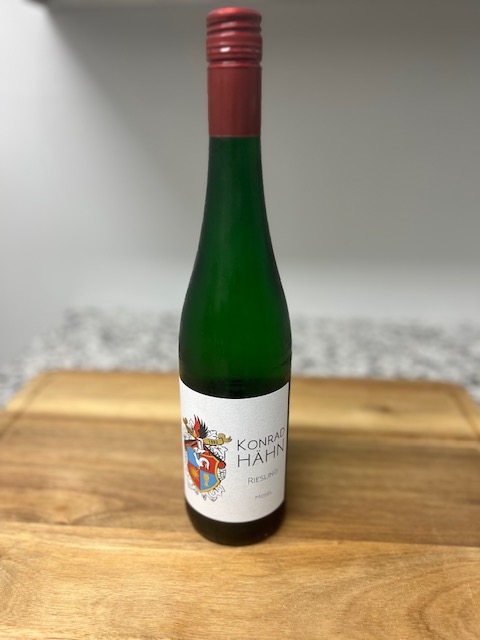
- Grape: 100% Riesling, a grape variety known for its high acidity, floral and fruity aromas, and ability to range from dry to sweet styles.
- Region: Mosel, Germany Mosel is one of Germany’s most famous wine regions, known for its steep vineyard landscapes along the Mosel River. The rocky slate soils of Mosel act as a natural amplifier for the sun, helping the grapes develop a lively acidity and concentrated flavors, despite the cool climate. The cool climate here allows Riesling grapes to ripen slowly, resulting in wines that are fresh, fruity, and often with a vibrant acidity. Mosel Rieslings, in particular, can have notes of green apple, lime, and occasionally a subtle minerality, depending on the specific vineyard and winemaking techniques.
- Wine Style: Still White
- Flavors: Fruity notes of green apple, pear and peach
 WineMadrina